

Restore Nature Law Campaign
The EU Nature Restoration Law (NRL) sets legally binding targets to revive Europe’s ecosystems—turning vital environmental benefits into a reality for everyone. It represents a historic opportunity to secure a future where nature and people thrive side by side. Thanks to the dedication of many NGOs, the NRL has emerged in one of its strongest possible forms, reflecting years of advocacy, collaboration, and scientific input.
EU Nature Restoration Law
Nature Restoration Regulation
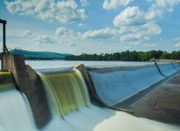
New hydropower development is not part of the solution to the current climate and energy crisis
Relying on new hydropower to accelerate Europe’s renewable energy rollout is short-sighted and irresponsible. Most viable sites are already in use, and further expansion risks severe ecological damage—destroying river habitats, fragmenting ecosystems, and undermining biodiversity. Instead of doubling down on projects with high environmental costs, Europe should prioritise truly sustainable, low-impact renewables and invest in restoring the rivers that hydropower has already degraded.
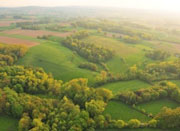
Connectivity: species moving freely between habitats
Connectivity is the degree to which landscapes and seascapes allow species to move freely between habitat patches permitting ecological processes to function in an unimpeded manner.
MCE on the Habitat connectivity in the new Nature Restoration Law – joint document with BatLife Europe, Reptile and Amphibian Conservation Europe (RACE) and The Habitat Foundation.

Only fully rewetting will stop peatland degradation
The need for restoration
Peatlands occur in almost all EU Member States, with a concentration in North-western,Nordic and Eastern European countries, covering an area of approximately 350,000 km2,of which more than 50% are degraded by drainage and used for agriculture, forestry andpeat extraction.
The EU is the second largest global emitter of greenhouse gases (GHG) from drainedpeatlands (230 Mt CO2eq/year = 15% of total global peatland emissions), which equates toapproximately 7% of EU-27 total GHG emissions (3,601 Mt CO2eq/year in 2019). To reducethese emissions significantly and protect the remaining peat carbon stocks, restoring drainedpeatlands must entail rewetting (raising water levels to near the surface, e.g. by drain blockingor stopping pumping in polders).
Besides reducing GHG emissions, rewetting peatlands will prevent soil subsidence, eventualflooding, and saltwater intrusion in coastal areas. It will lower the risk of peat fires, soilerosion, and desertification. Peatlands further have a high proportion of specialised plant,amphibian and bird species that are rare and threatened on the European or even global level.As a result of habitat isolation and heterogeneity, peatlands play a special role in maintainingbiodiversity at the genetic level.
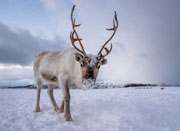
Mammal of the month: Reindeer – Santa’s perfect helpers!
Reindeer: Santa’s perfect helpers!
A ’must’ of every Christmas landscape, reindeer are iconic inhabitants of taiga, tundra and other cold habitats throughout the circumpolar region. They form an important part of the livelihoods of many Arctic communities. The name ’caribou’ has traditionally been used in North America to distinguish free-roaming herds from domesticated reindeer. Thanks to new genetic analysis, we can now identify several distinct groups, not all of which have been named yet. Some may even be classified as separate species. The IUCN regards the entire reindeer complex as Vulnerable to extinction; some may already have become extinct, while others are declining or extremely rare. Only a few have stable populations across their range. As well as being adversely affected by climate change and habitat loss, reindeer are threatened by disease outbreaks in North America and more recently in Europe.
While some populations are stationary, migratory herds may travel up to 5,000 km (3,000 miles) to find food throughout the winter. Reindeer are unique because females as well as males may grow antlers. As an adaptation to their freezing cold habitats, their circulation and respiration are all about conserving body heat. Their nose is special: built on so-called turbinate bones, specific nostrils and specialized blood-vessels in their nasal passages make reindeer noses vividly red inside (though not on the outside!), while their keen sense of smell allows them to sniff out mosses and lichens under thick layers of snow. Reindeer are swift, and their physical features are adapted to roaming through snowfields: their thick fur coat made up of hollow hairs and their extremely wide hooves help them cross rivers and lakes. Santa could not have found a better equipped animal for pulling his sleigh.
By Aniko Zolei
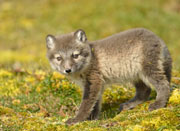
MCE’s position on the European Commission’s communication on wolves in Europe
Working for a Europe where na1ve mammal popula1ons thrive and their habitats flourish Mammal Conservation Europe is registered as an association in the Netherlands Chamber of Commerce Registration N 84553332 and RSIN 863256983 IBAN: NL59 INGB 0675 7681 79
Mailing address: Toernooiveld 1, 6525ED Nijmegen, The Netherlands
Web: www.mammals.eu Email: info@mammals.eu
Position on the European Commission’s communication on wolves in Europe Mammal Conservation Europe is concerned about the Press Release made by the European Commission ‘Wolves in Europe: Commission urges local authorities to make full use of existing derogations and collects data for conservation status review’, 4th September 2023.
Following centuries of persecution, wolf populations are currently recovering in many EU countries. This is largely a consequence of social, economic and land-use factors, including reforestation and the progressive abandonment of agricultural land, but it has also been supported by legislation to protect the species. ConNlicts between wildlife conservation and the interests of hunters and farmers, have arisen in some areas. This is to be anticipated given that many activities and management practices have evolved over recent decades, in the absence of large carnivores in the landscape. As noted in the Commission’s Press Release, such conNlicts occur ‘especially where measures to preventattacks on livestock are not widely implemented’.
Mammal Conservation Europe is surprised to see the European Commission calling for evidence on “challenges related to the return of wolves’’ with a consultation period lasting only 18-days. This short time-frame is at odds with the Commission’s Better Regulation Guidelines which require that all stakeholders should have a reasonable period in which to make informed and effective contributions.
The wording of the Press Release, which ‘urges local authorities to make full use of existing derogations’, without any reference to the Mitigation Hierarchy and the Habitats Directive’s clear guidance that derogations should be used only as a last resort whenother measures have failed is also very disappointing.
Finally, we consider the comments on the potential risk to human safety as inNlammatory, and contrary to the scientiNic evidence which shows that the risks to humans is extremely low.
Working for a Europe where na1ve mammal popula1ons thrive and their habitats flourish
Mammal Conservation Europe is registered as an association in the Netherlands
Chamber of Commerce Registration N 84553332 and RSIN 863256983 IBAN: NL59 INGB 0675 7681 79
Mailing address: Toernooiveld 1, 6525ED Nijmegen, The Netherlands
Web: www.mammals.eu Email: info@mammals.eu
14th September, 2023