Encourage
collaborations
Collaboration between experts, NGOs and other stakeholders is vital to achieve effective conservation and monitoring of mammals across Europe. Many species are migratory, or have populations that extend across national boundaries, and therefore international cooperation is crucial. We invite people and organisations who are passionate about mammal conservation to work together to influence policy, monitor mammals, review evidence, and achieve practical conservation actions. We aim to share experiences and knowledge across generations and between different kinds of organisations, and welcome innovative approaches to solving the many difficulties faced by our mammal populations.
Support
the establishment and development of organisations with a focus on mammals
There is an urgent need to improve capacity for mammal monitoring, data collation, and practical conservation action, in many countries in Europe. We will therefore support the development of local and national organisations, sharing examples of good practice and assisting with access to resources. These organisations will be important parts of the MCE network, and will in future provide the skills and advocacy needed for effective mammal conservation across the continent.
Improve
the quality of data on mammals and their habitats
We work on terrestrial, semi-aquatic and marine mammal species, focusing on improving knowledge of their presence, distribution and abundance at national and international geographic scales. Our work includes rare, endangered and elusive species, as well as abundant species that are critical to ecosystem functioning. We build capacity for using new surveillance methods, including camera trapping, radio-telemetry, bioacoustics, and genetic monitoring, across the continent. We also emphasise the importance of monitoring habitat quality, connectivity, trends, and possible management strategies that may improve conservation outcomes. Harmonisation of research and monitoring methodologies, and the facilitation of data flows between organisations, will lead to better-informed large-scale management of mammals and their habitats.
Undertake
advocacy and address policy
MCE promotes mammal conservation and research among institutions, communities and other nature conservation stakeholders. We operate an Open Access policy, making all our strategic documents, action plans, reports, monitoring methods, experiences, photos and videos of species, best practice cases on nature protection easily available. We use different communication channels including social media, information portals, national and international media, newsletters, conferences, workshops, training, meetings, summer camps, study tours and outdoor education. We discuss with politicians and statutory bodies the urgent issues of mammal conservation and highlight research gaps.
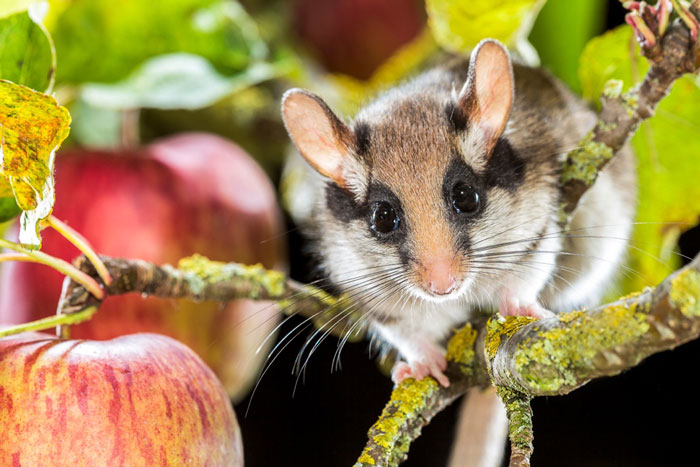
Garden Dormouse conservation initiative
background
The garden dormouse is native to Europe and was previously widespread across much of the continent. While it retains strongholds in south-western Europe, it appears to have been lost from more than half of the range it occupied in 1978. It is now extinct in Lithuania, Finland and Slovakia, probably extinct in Belarus, and has only single populations in the Netherlands, Poland and Slovenia. It is rare and localised in Austria, Ukraine, Romania and Croatia and is declining in Germany, Flanders (Belgium), Czech Republic, Latvia and Estonia. It is likely that the new IUCN Red List for European Mammals will raise the status of the species to Threatened . Yet in most countries there is no systematic monitoring, and the causes of the decline are unclear. The contraction of a species over such a wide geographical area requires coordinated research and action across Europe.
What we are doing
We have brought together experts from all of the European countries where garden dormice are currently or formerly present and we are exchanging ideas on the likely causes of the decline.
What we want to do next
1.
Raise awareness of the plight of the garden dormouse, and provide information on steps that can be taken by the public and land-managers to help the species.
2.
Develop standardised monitoring techniques that can then be deployed across the species’ range and former range, to gather up-to date information on its distribution and population size.
3.
Develop a Species Recovery Plan.
4.
Develop pilot-scale intervention projects that will inform a European-scale Recovery Project.
How you can help
1.
Tell us of any sightings
If you see a garden dormouse, please let us know. You can report sightings using the iNaturalist app (available for android or apple phones), the iNaturalist Garden Dormouse Initiative page, or through recording schemes operating in your country.
2.
Provide food and shelter
Retain old orchards, hedgerows and natural vegetation that provides shelter and food for dormice.
3.
Help avoid accidental deaths
Cover water barrels in your garden to avoid accidental drowning.
Avoid pesticides and poisons in your garden. Work in Germany suggests that rat and mouse poisons may be harming many garden dormice.
4.
Spread the word
Tell people about the plight of the garden dormouse and what they can do to help.
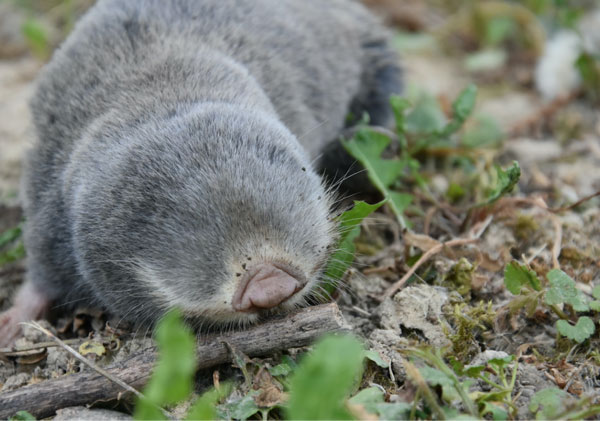
Vojvodina Blind mole rat initiative
Help Save the Blind Mole Rat – A Grassland Ecosystem Engineer
Across Europe, grasslands are disappearing, taking with them countless species. Among the most threatened are blind mole rats, vital “ecosystem engineers” whose underground burrows enrich the soil, create habitats for other species, and sustain healthy grasslands.
Today, many blind mole rat species survive only in a handful of small, isolated populations, putting them at grave risk of extinction. In Hungary, our partners have led seven translocation projects since 2013—moving individuals to safer habitats to establish new populations. These efforts show promise, but success depends on careful protocols, high-quality habitats, and continued monitoring.
Now, with a newly discovered population in Croatia, the urgency is greater than ever. To give these rare mammals a future, we must act quickly to protect their habitats and expand conservation translocation efforts.
What we are doing
Sites like this where mole-rats can thrive are threatened by agricultural development and urban developments. Many individuals are also trapped or killed by dogs when they disperse above ground.
MCE has started a hands-on project to rescue the individuals in the threatened area by relocating them in a new safe site. We have helped to create the application to the Croatian government for translocation permits and identified release sites. We hope that work to capture the animals will begin in Spring 2026.
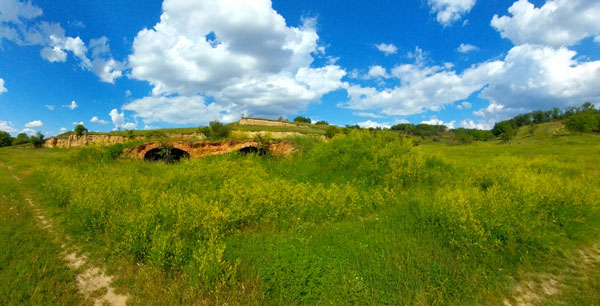
How you can help
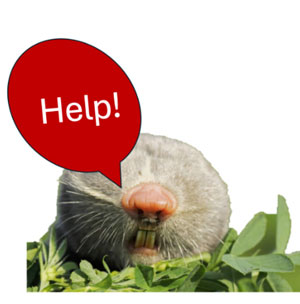
A tiny population of the Vojodina blind mole-rat has been discovered in Croatia. This is the only known population in the country and fewer than 1,000 individuals are thought to exist globally.
Please help us help them!
www.gofundme.com/f/save-some-of-europes-most-threatened-animals
Your donation can help us rescue and safeguard blind mole rats, ensuring that these unique animals—and the ecosystems they sustain—are not lost forever.