The Mediterranean monk seal (Monachus monachus) is not only one of the most threatened pinniped species, but one of the world’s most threatened marine mammals. There are fewer than 1000 individuals left in the wild and they are restricted to hidden caves and a few quiet, safe beaches. One such haven, Sazan Island, Albania, is threatened by the planned development of a luxury resort which could result in the disappearance of monk seals once again from the island.
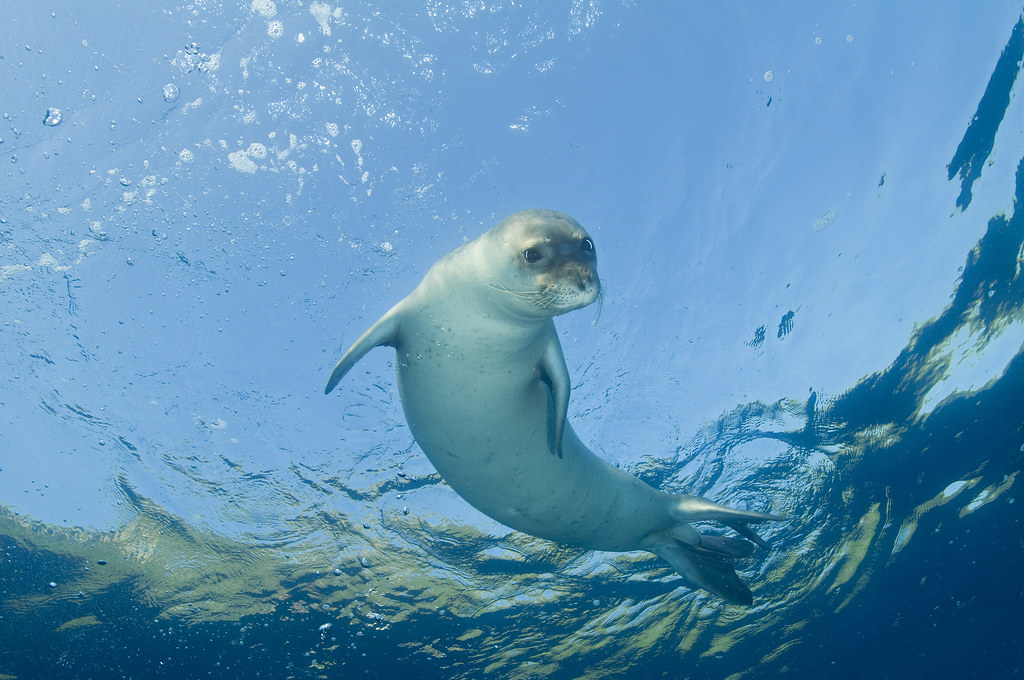
Monk seals’ current distribution is a fragment of its historic range. Previously found across the Mediterranean, Black Sea, northern Africa, and the Canary Islands, today Mediterranean monk seals are restricted to pockets of coastline along Greece, Turkey, Cyprus, Madeira, and Cabo Blanco. Recently there have been occasional sightings in Albania, Montenegro, Croatia, and Italy which have sparked optimism about the recovery of the endangered species. However, they still remain extinct in over 18 countries within their historic range. The surviving individuals today are divided into three subpopulations, two in the Atlantic Ocean and one in the Mediterranean. Separated by great distances, these populations are genetically isolated.
Historically it was a common sight to see monk seals hauled out on open beaches, but this behaviour has changed due to severe threats from human activities. They now avoid beaches and instead haul out in marine caves to avoid disturbance and persecution. However, these caves require certain characteristics such as an entrance with a corridor and a raised platform above the water for seals to rest on. This drastically reduces the available habitat for the species and further confines them spatially, limiting their ability to disperse and expand their limited range.
Mediterranean monk seals have been threatened and persecuted by humans for hundreds of years. They used to be exploited for fur and meat but were also killed by fishermen for damaging equipment or competing for fish. Their modern decline is primarily caused by habitat destruction and fragmentation, although the fisheries industry is also known to cause significant harm to the species when they are caught as accidental by-catch in nets. Monk seals today are still targeted and killed by fishermen. Tourism is also a major threat to the species through significant disturbance which affects the raising and survival of seal pups.
Recent improvements to Atlantic populations like in Cabo Blanco mean the Mediterranean monk seal’s global status is currently listed as Vulnerable under the IUCN. However the local Mediterranean population is classified as Critically Endangered due to extreme anthropogenic pressures like killing by fishers, coastal development, tourism disturbance, and habitat loss and destruction. Cyprus is a prime example of this, with a small breeding population of around 40 individuals confined to just a few caves. Populations like these across the eastern Mediterranean are severely threatened and lacking in adequate protection on a national and international scale. Development, disturbance, and conflict with fishers continue to threaten extinction of these small monk seal populations.
Sazan Island has recently seen the return of its monk seal population. Located off the coast of Albania between the Adriatic and Ionian Sea, the island and its seals are currently threatened by the development of a 45ha luxury holiday resort. This controversial scheme was approved in 2025 under new rules introduced by the Albanian government, designed to bolster tourism and economic growth in the country. This ‘Strategic Investment with Special Procedure’ enables approval to be given to high value projects, even if they are ecologically damaging. The luxury development threatens the island’s coastal caves — critical monk seal habitat — alongside 36 threatened marine species living on and around Sazan Island. Seagrass, Posidonia oceanica, which is vital for the Mediterranean ecosystem is also likely to be damaged. The recent return of monk seals to Albania has been a major conservation success for the species yet the boat traffic, sewage systems, roads, pollution, and increased human disturbance from this project are highly likely to reverse this victory.
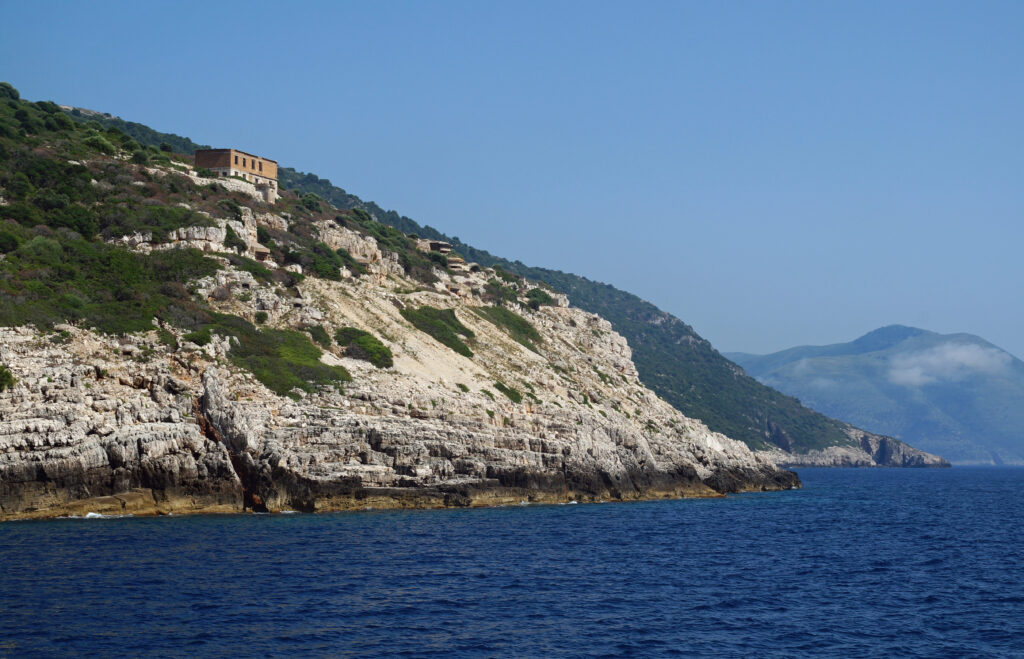
The project is being led by Affinity Global Development, a company owned by Jared Kushner, the husband of Ivanka Trump. The Albanian government is supportive of his plans as the resort will boost luxury tourism in the area, which is a fast-growing industry in Albania. Although currently uninhabited, Sazan Island is not untouched, having had a prominent military history. But this development project threatens new and significant disturbance to the island.
The Mediterranean monk seal is a highly protected species, listed on and protected by major international laws and treaties such as the Convention on International Trade of Endangered Species (CITES), Convention on Migratory Species (CMS), the Bern Convention, and the Convention on Biological Diversity (CBD). The development project on Sazan Island directly violates these conventions. Not only that, but Sazan Island is protected under Albanian law as part of the Karaburun-Sazan Marine National Park, meaning development should be prohibited. The waters around the island are a Specifically Protected Area of Mediterranean Importance (SPAMI). Albania is currently in the process of applying to join the European Union. To do this it must commit to several fundamental environmental policies: the Sazan Island project violates these commitments.
Bledi Hoxha, a member of the Protection and Preservation of Natural Environment in Albania (PPNEA) and a Mammal Conservation Europe board member, has sent a letter signed by 40 other environmental organisations from 28 countries to the prime minister of Albania urging an immediate end to this project. You can see Bledi discussing this issue here.
With plans likely to go ahead, Mammal Conservation Europe is in support of PPNEA’s efforts to stop the development. We are raising the issue with IUCN and the EU, are also urging the Albanian Government to stop the development, uphold international conventions, and protect endangered Mediterranean monk seals.
Beton D, Broderick AC, Godley BJ, Kolaç E, Ok M, Snape RTE. New monitoring confirms regular breeding of the Mediterranean monk seal in Northern Cyprus. Oryx. 2021;55(4):522-525.
Karamanlidis, A.A., Dendrinos, P., Fernandez de Larrinoa, P., Kıraç, C.O., Nicolaou, H. & Pires, R. 2023. Monachus monachus. The IUCN Red List of Threatened Species 2023: e.T13653A238637039. https://dx.doi.org/10.2305/IUCN.UK.2023-1.RLTS.T13653A238637039.en
Lian Gilliver, 27th January 2026, ‘Deep concern’: Over 40 environmental groups urge luxury resort on Albanian island to be suspended, EuroNews, Available at: https://www.euronews.com/green/2026/01/27/deep-concern-over-40-environmental-groups-urge-luxury-resort-on-albanian-island-to-be-susp
Marzio Mian, 24th June 2025, Sold to the Trump family: one of the last undeveloped islands in the Mediterranean, The Guardian, Available at: https://www.theguardian.com/world/2025/jun/24/trump-family-kushner-undeveloped-island-mediterranean-sazan-albania