
Merry Christmas from all of us at Mammal Conservation Europe! This blog explores one of Europe’s more festive mammals as we get closer to Christmas. I hear sleigh bells ringing…
Reindeer (Rangifer tarandus) capture the awe and imagination of children across Europe on Christmas Eve as they wait to catch a glimpse of that iconic sleigh being pulled across the sky. But sled-pulling reindeer are not exclusive to Santa Claus and in fact are deeply rooted in cultural history across Northern Europe. The Sámi people, Europe’s only recognized Indigenous group, live across northern Norway, Sweden, Finland, and Russia. For thousands of years they have herded reindeer and used them for clothing, food, and transport across snow. Their relationship with reindeer is one of mutual respect, care, and sustainable use, far from Europe’s modern-day overconsumption and exploitation of wildlife.
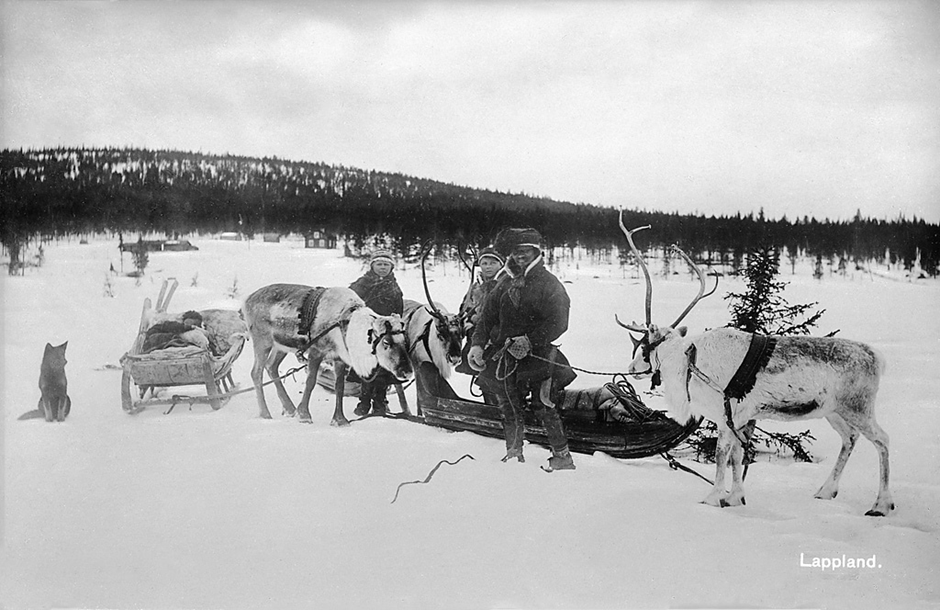
Within Europe, reindeer have historically been distributed across the north in habitats of tundra, mountains, and forest. They feed on new growth trees in the summer but in the winter months rely on lichen for food. Unfortunately, a combination of habitat loss, human disturbance, and climate change have caused reindeer to decline, and currently the species is classed as Vulnerable on the IUCN Red List. Domesticated reindeer vastly outnumber wild reindeer in Europe, with 3 million of the former and only 1 million of the latter. They are an important species in the European Arctic, affecting vegetation through grazing and trampling which maintains open areas of tundra. Climate change threatens the future of reindeer in Europe. As the tundra warms, available habitat is decreasing and migration patterns are changing. Food sources are less available as both plants and reindeer become asynchronous with each other and the seasons. The Arctic is warming faster than the rest of Europe, making this an especially concerning situation.
Today, the Sámi have developed a new sustainable use for their reindeer: tourism. People pay to visit reindeer farms or herds and learn about traditional Sámi ways of life. This is especially popular in the winter, with places like Lapland and Tromsø becoming famous for their Christmas-related tourism activities which generates significant local income. This allows for traditional Sámi ways of life to persist and provides a source of income via the sustainable use of wildlife. Indigenous tourism and stewardship is not a well-known issue in Europe, but places like Canada are seeing huge growth in this industry, for example the Great Bear Rainforest in British Columbia. It is important not only for education in the environment and Indigenous cultures, but also for supporting Indigenous management and stewardship and restoring land rights and sovereignty to many communities.
The decline of reindeer threatens both the health of the tundra habitat and the cultural heritage of the Sámi people. Reindeer tourism, especially at Christmas, offers a multi-beneficial solution to this problem where both people and wildlife can support each other (much like Santa and his reindeer). However, climate change threatens this way of life and reindeer are likely to continue to decline and lose more habitat if drastic action is not taken. The Sámi have lived sustainably alongside reindeer and their habitat for thousands of years, but the warming Arctic makes the future uncertain.
Author’s note:
I had a personal investment in writing this piece, as my family come from Norway and I am descended from the Sámi people through my grandmother. I am currently researching Indigenous governance in Canada and South Africa for my MSc, and discussions of Indigenous land rights and stewardship are much more prominent in these parts of the world. I never made the link back to the Sámi people in Europe until now, but the underlying themes seem to be consistent with Indigenous groups across the world.