
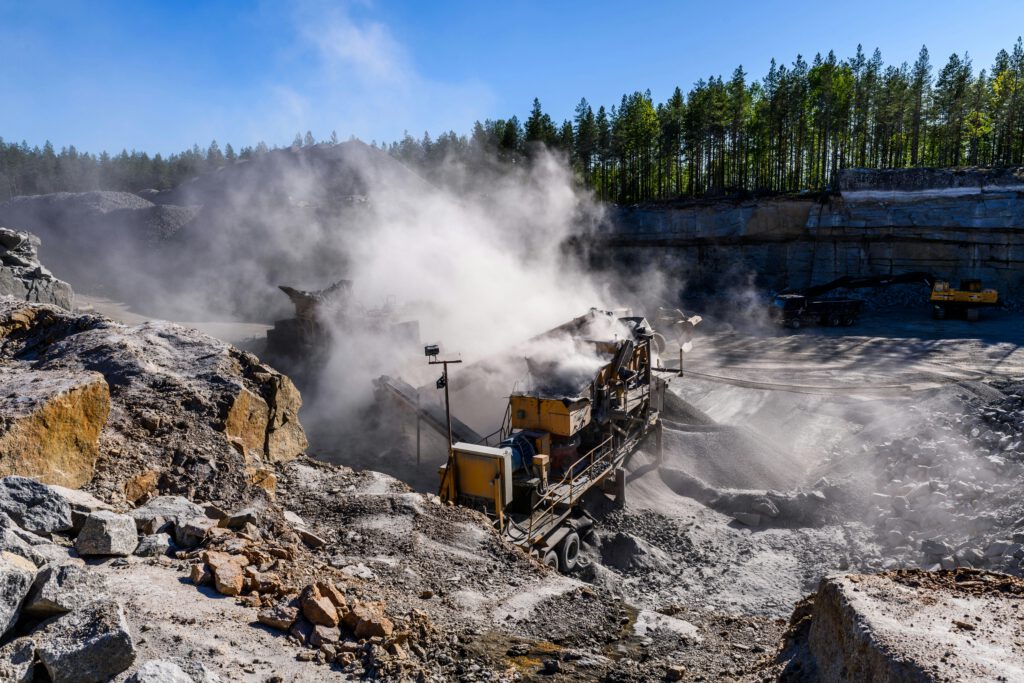
Can development of a mine meant to power Europe’s green transition come at the cost of Indigenous livelihoods? A zoning plan recently approved by the Swedish government is stirring controversy and raising questions regarding EU priorities. The Nunasvaara South graphite mine moved one step closer to its expected production start in 2029 when The Talga Group, an Australian mining company, recently announced that their zoning plan had been formally adopted by the Swedish government. But the mine has been met with strong opposition from environmental and Indigenous groups.
Why the Mine Matters:
The landscape surrounding Vittangi in northern Sweden is known for naturally producing graphite and the Nunasvaara mine is being developed to extract 100,000 tonnes of this graphite each year. This will provide employment for 60 people and the graphite will be used to make lithium-ion battery anodes, a crucial component for renewable energy technologies like wind and solar power and electric vehicles. The project is advertised as a way to propel Europe towards greener energy. It appears to be environmentally conscious and Talga’s website makes sure to highlight its measures to reduce environmental impact and support biodiversity.
For the EU, projects like Nunasvaara are strategically important. The mine falls under the Critical Raw Materials Act (CRMA, 2024), a policy designed to reduce Europe’s reliance on imported minerals. This act was developed to shift to domestic production of such resources, reducing reliance on foreign imports. Currently China dominates the global supply of graphite and global tensions mean Europe is keen to begin supplying more of its own graphite. By listing Nunasvaara as a Strategic Project under the CRMA, the permitting process could be accelerated and graphite extraction can begin sooner.
This is a huge step in the right direction for domestic production of renewable energy in Europe. However, the mine has been met with strong opposition by those who feel it will ultimately harm the environment more.
Sámi Opposition:
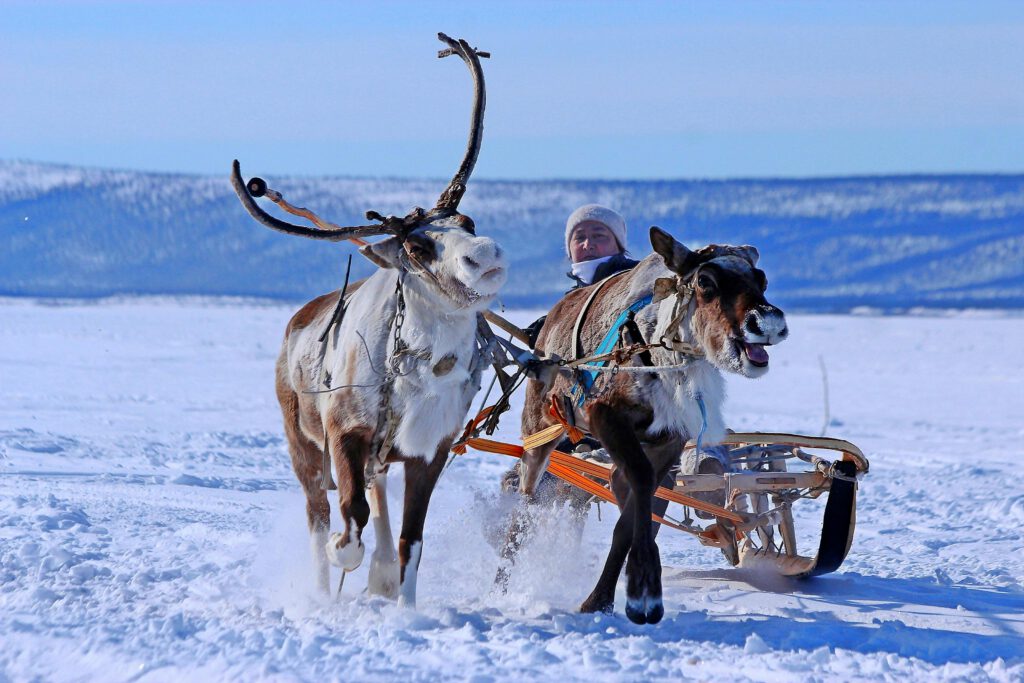
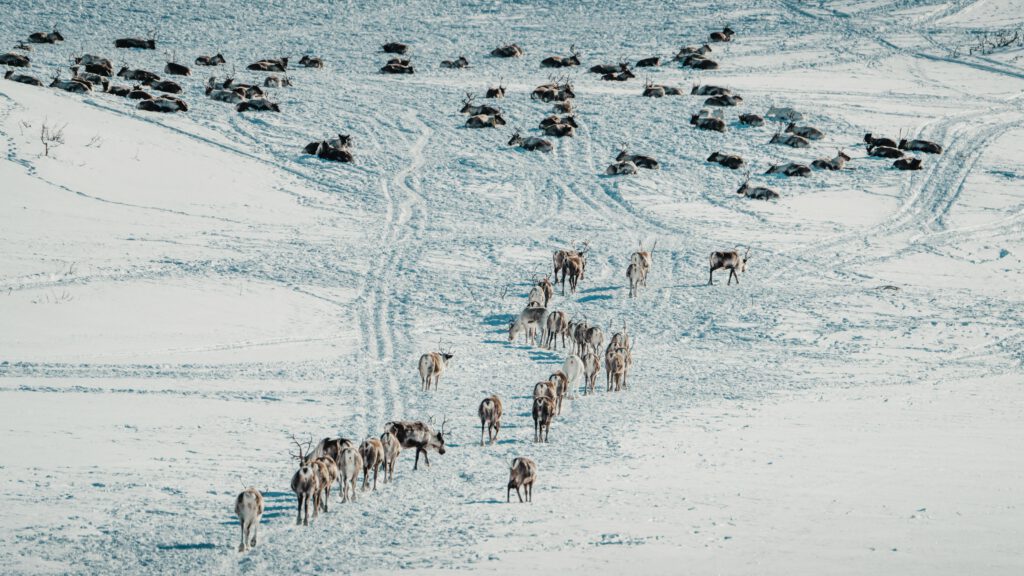
The primary voice of opposition has been the Sámi community. The Sámi people are Europe’s only recognised indigenous group. Their traditional livelihoods are heavily oriented around reindeer husbandry and herding, which has more recently expanded to reindeer tourism. The Nunasvaara South graphite mine is located on reindeer habitat, specifically very important winter grazing habitat. Members of the local Sámi community have raised concerns that their livelihood could be destroyed once the mine opens. In response to this, as part of their plan to minimise impact, the mine will halt operations during the winter grazing period. However, there are concerns that pollution from mining activities will destroy the winter grazing habitat regardless of whether mining operations temporarily halt.
The Sámi community have appealed multiple times against the mine, all of which have been dismissed by the Swedish Supreme Court, who argue that the mine had a minimal impact assessment conducted and that developers engaged in discussions with Sámi communities. However, many feel there has been limited consultation with locals, and any conversation that has occurred has been unconstructive.
What questions are raised?:
The dilemmas presented here are reminiscent of many conservation issues today. On one hand, the need for materials for sustainable renewable energy is necessary for meeting net zero targets and reducing harmful emissions. However when it comes at the expense of crucial habitat for a threatened species, and for the livelihoods of Indigenous peoples, it highlights concerns over who is prioritised. Just because something is sustainable or renewable it does not mean it will not have negative impacts.
Sources:
Bhattacharyya, S., Roy, S., Lin, X., Campagnol, N., Vlad, A., & Ajayan, P. M. (2025). Graphite: the new critical mineral. Nature Reviews Materials. doi: 10.1038/s41578-025-00848-5
Gabay, A (2025), ‘Sámi reindeer herders protest EU-backed graphite mine, fearing lost grazing ground’, Mongabay, 22nd December, Available at: https://news.mongabay.com/2025/12/sami-reindeer-herders-protest-eu-backed-graphite-mine-fearing-lost-grazing-ground/
Johnson, S (2026), ‘Vittangi graphite mine in Sweden gets zoning plan approval’, Mining.com, 23rd January, Available at: https://www.mining.com/web/vittangi-graphite-mine-in-sweden-gets-zoning-plan-approval/
Mathieson, A (2026), ‘Mining industry threatens livelihoods of Sweden’s Indigenous Sámi people’, National Indigenous Times, 19th March, Available at: https://nit.com.au/19-03-2026/23259/mining-industry-threatens-livelihoods-of-swedens-indigenous-sami-people